.jpg)
Align
Visual-Audio Interaction | Installation | Psychosomatics
The project is a multimedia artwork integrating visuals, audio, and sensor exploring the relationship between cognition and physiology of people with obsessive-compulsive disorder (OCD) or anxiety disorder. Here, the sound represents the cognition, and the visuals represent a balanced self. Adjust the sound to see the visuals being distorted, and manipulate the GSR sensor. which represents the physiological state, to get the visuals integrated again. The whole process simulates a typical dilemma that the patients usually face due to a misalignment of cognition and physiology, and the effort they made to regain the alignment.
.jpg)
.jpg)
.jpg)
.jpg)
.jpg)
.jpg)
.jpg)
.jpg)
.jpg)
.jpg)
.jpg)
.jpg)
.jpg)


.jpg)
.jpg)

.jpg)
.jpg)
Motivation
Due to the diagnosis of OCD of a friend, I became gradually knowledgeable of mental diseases like that. I found that people with OCD or anxiety disorders often experience moments where they feel like they are losing control: they cannot stop thinking or doing something, although they do not want to. Generally, it is believed that a lack or low transmission efficiency of 5-hydroxytryptamine is one of the shared physiological foundations of OCD and many anxiety disorders. Hence, methods such as selective serotonin reuptake inhibitors can significantly relieve anxiety. This phenomenon interests me and makes me think of the pains and misunderstandings by others such misalignment of one’s cognitive intentions and actual physiological situation brings to people with OCD and anxiety disorders. Therefore, I decided to create an artwork which could implicitly inform people of the dilemma the patients face and arouse empathy, understanding, and inclusiveness.
Interviews
I interviewed one person with OCD, one with anxiety disorder, and one who holds both. All of them reported similar feelings of “being not intended to do something while just cannot”. They said that was very conflicting and unsettling, making them live in “an error with clear cognition”, which often exhausted their family members and had them feel guilty.
I collected objects and sound that related to thier lives and diseases. For example, someone said she would think of earphones when talking about her OCD because she was forced to organize her earphone cables meticulously every day.
All objects I collected are:
-
Earphones
-
Chargers
-
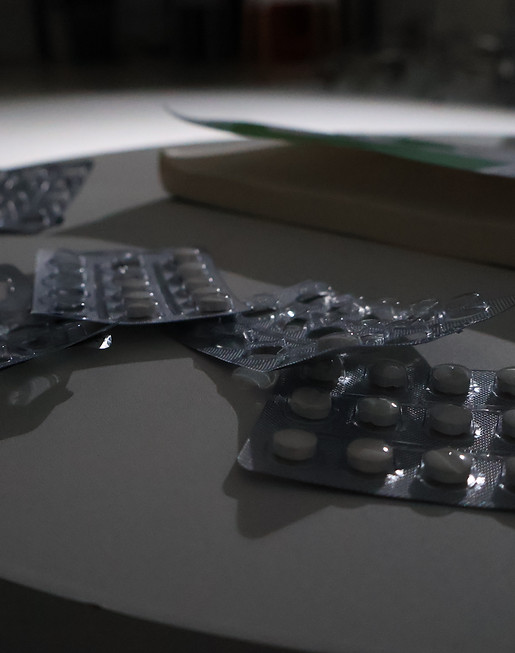
Medcines
-
Clothes
-
Wet tissues
-
The Cure for Neurasthenia and Obsessive Thoughts written by Masatake Morita
Sound I collected will be described in the “Sound Design” section.
3D Scanning
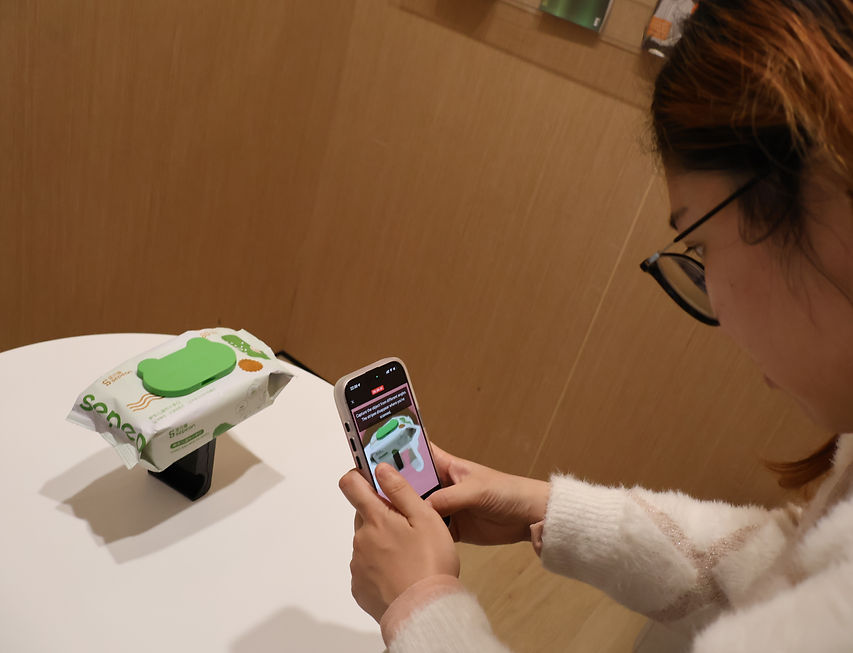
Models used in the visual part of this project were 3D scanned using Scaniverse and 3D Scanner App and then adjusted in Blender.


.jpg)

.jpg)

Sound Design
The sound was designed from asking the three interviewees sound they mostly concern and was connected in series to mimic a day of a patient with OCD. Most of the sound was recorded by hand.
In orders they are:
-
Apple alarm clock playing with Radar
-
Sound of rustling in the quilt
-
Sound of water flow
-
Sound of washing hands
-
Sound of repetitively wiping the body
-
Sound of repetitively placing objects
-
Many people talking in a chaos environment
-
Sound of biting nails
-
Tinnitus sound
-
Sound of train passing by
-
Sound of tearing pills
-
Sound of smoothing the plastic film on the pill
-
Sound of someone spitting
-
Sound of cars’ humming
-
Sound of friction among human bodies
-
Sound of foot kicking the door
-
WeChat call music
-
Sound of friction between garbage bags
-
Sound of throwing garbage bags
-
Sound of an iron spoon hitting an iron bowl
-
Sound of friction between quilts
-
Buzzing sound
Display Design
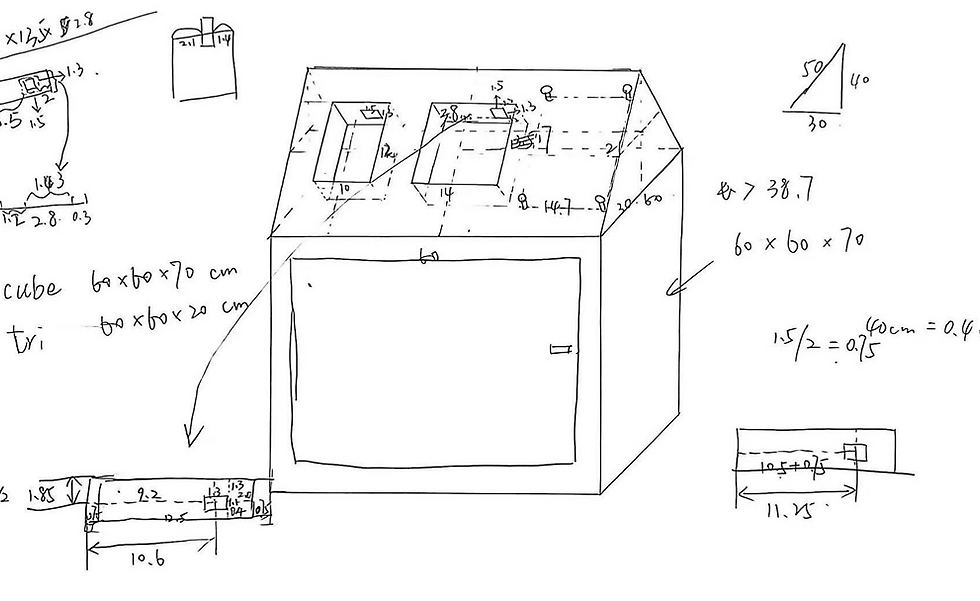
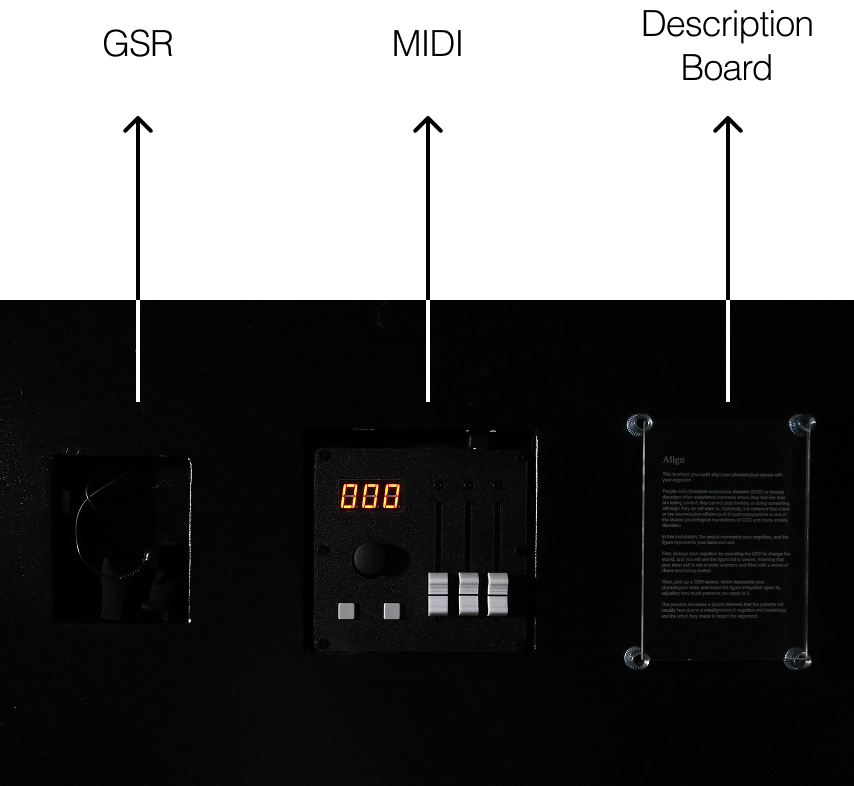
An establish stand was designed to hold the description board, MIDI, and GSR sensor.
.jpg)
Interaction Process
Sound plays in normal tune with visuals changing with the sound until the audience comes close.
The visuals return to the normal and initial integrated state.
Phase 1.
Phase 2.
Phase 3.
Phase 4.
The audience pushes faders on the MIDI to adjust the sound to whatever tunes they like.
The audience wears the GSR sensor and consciously change the sensor’s reading by regulating the emotion and mental state.
Interaction Logic

Technology